What Attic Insulation Removal Really Costs for Los Angeles Homes
Price is the first thing most homeowners want to know, and it is the hardest thing for any honest contractor to quote over the phone. A search for attic insulation removal cost near me returns a wide spread of numbers, because the real figure depends on the size of the attic, the type of insulation, how contaminated it is, and how hard the space is to reach. A clean, open attic in a single-story Reseda ranch house is a very different job from a cramped, rodent-fouled attic over a two-story Sherman Oaks home with ductwork in the way. Understanding what moves the price helps a homeowner read an estimate instead of just reacting to the bottom line.
This matters because the gap between a fair quote and an inflated one is usually explained by the attic itself, not by the company name. Homeowners who know which factors legitimately raise the cost of attic insulation removal can tell the difference between a thorough scope and padding. The goal here is not a single dollar figure, which would be misleading, but a clear picture of what drives the number so a Los Angeles homeowner can compare attic insulation removal companies on the same terms.
The Factors That Actually Set the Price
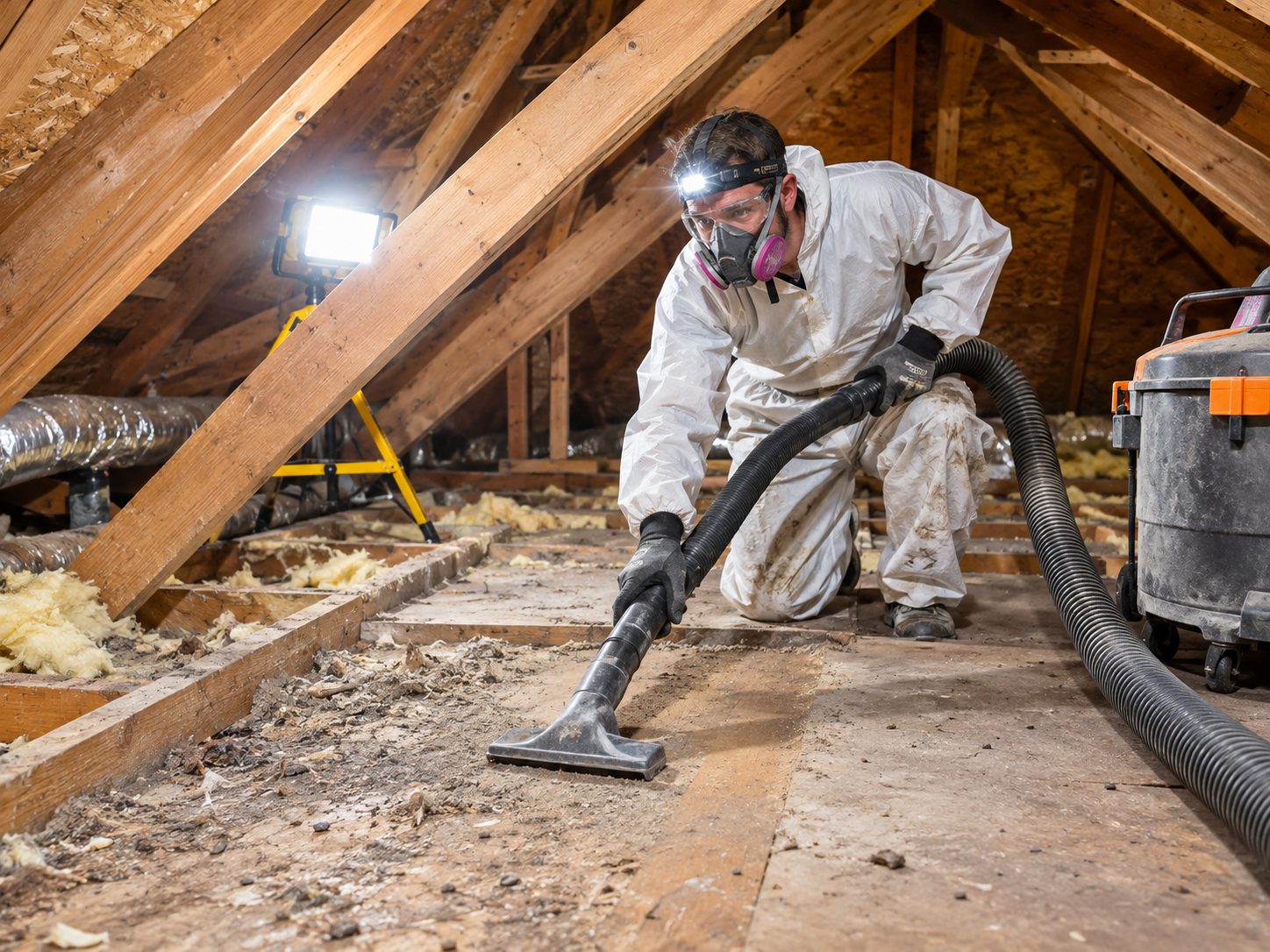
Square footage is the starting point. Removal is usually priced by the attic floor area, so a larger home costs more simply because there is more material to extract and bag. The type of insulation comes next. Loose-fill cellulose and blown fiberglass are vacuumed out, which is labor-intensive but simple. Batt insulation is pulled and bagged by hand. Older materials, and anything suspected of containing asbestos or vermiculite, change the job entirely, because testing and, if needed, licensed abatement add cost and time that have nothing to do with ordinary removal services.
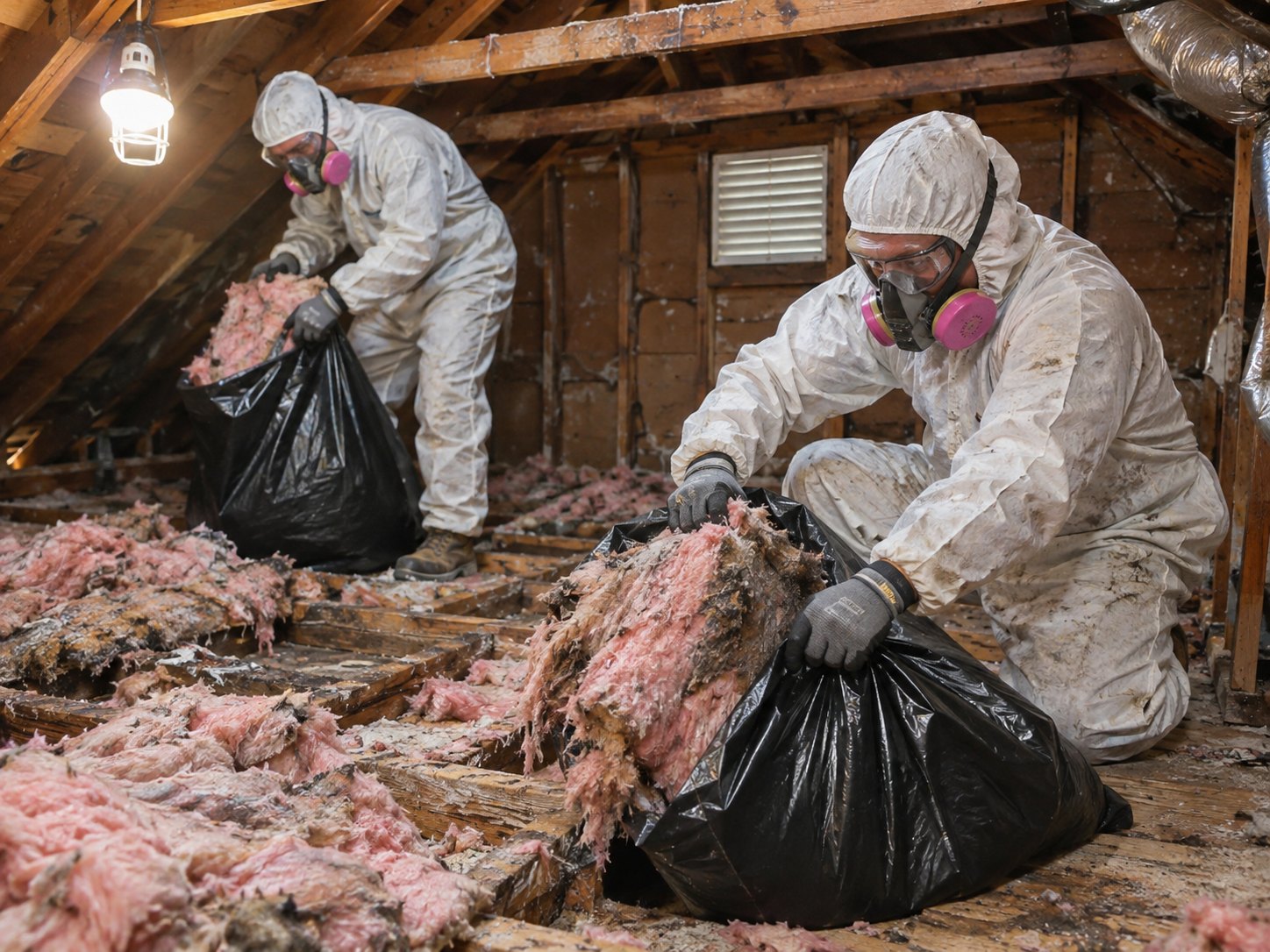
Contamination is the biggest swing factor. A clean attic where the insulation simply needs updating is the low end. An attic with heavy rodent activity needs droppings and nesting material removed, surfaces sanitized, and the space deodorized, all before new insulation can go in. That added scope is real work, not an upsell, and it is why two homes of the same size can carry very different quotes. Access is the last major factor. A tight attic hatch, low roof pitch, ductwork filling the space, or a long carry from the attic to the truck all slow a crew down and raise labor.
Contamination, not size, often sets the price
Two Los Angeles attics of identical square footage can carry very different removal quotes. The gap is usually contamination. An attic with heavy rodent activity needs droppings and nesting material removed, surfaces sanitized, and odor treated before new insulation goes in, and that added scope is legitimate work rather than an upsell.
A written contract is the law over 500 dollars
California requires a written contract for home improvement work costing more than 500 dollars. For attic insulation removal, that written scope should state attic area, insulation type and condition, contamination, disposal, and whether air sealing and new insulation are included, which protects the homeowner and makes competing quotes genuinely comparable.
Licenses are verifiable in minutes
The California Contractors State License Board publishes license status online, so any homeowner can confirm that a contractor's license number is active and in good standing before signing. Pairing that check with an itemized written estimate puts the decision on scope and credentials rather than on sales pressure.
Removed insulation does not simply vanish. It has to be bagged, hauled out, and disposed of according to local rules, and contaminated or hazardous material carries stricter handling and disposal requirements. Reputable attic insulation removal companies build disposal into the quote and document it, especially where asbestos is involved and permitted disposal is required. An estimate that is suspiciously low sometimes leaves disposal vague, which can turn into a surprise later or, worse, material dumped improperly. Asking how disposal is handled is a fair question that separates careful companies from corner-cutters.
How Removal and Replacement Are Usually Bundled
Most homeowners are not removing insulation for its own sake. They are clearing the way for a new, full-depth blanket that meets current standards. Because of that, attic insulation removal and replacement are often quoted together, and bundling them usually costs less than treating them as two separate visits. The crew is already set up, the attic is already exposed, and the air sealing that should happen between removal and new insulation is far easier with the cavity empty. When comparing quotes, a homeowner should check whether a price covers removal only or the full remove-seal-replace sequence, because that single detail can explain a large difference between two numbers.
There is also a timing argument for bundling. An attic left bare after removal is an attic exposed to dust and pests, so the replacement should follow promptly. Companies that handle insulation removal and the new install as one project keep that window short. This is one reason many Los Angeles homeowners prefer a single contractor for the whole scope rather than hiring one crew to tear out and another to install.
Rebates and the Tax-Credit Question
Cost conversations often turn to rebates and tax credits, and this is an area where accuracy matters because the rules changed recently. The federal residential energy efficiency tax credits that many homeowners relied on, under Sections 25C and 25D, ended for property placed in service after December 31, 2025. That means a 2026 attic project should not be budgeted around a federal credit that is no longer available. Anyone who hears otherwise should verify it with a tax professional rather than a contractor.
Local utility rebates are a different story and are worth checking. LADWP and SoCalGas have historically offered rebate programs tied to attic insulation upgrades for qualifying Los Angeles County customers, though the specific amounts and eligibility rules change from year to year. A homeowner should confirm the current program directly with the utility before counting on a figure. Reputable companies will help with the documentation a rebate requires, but they will not promise a dollar amount they cannot control, and a quote that leans on a guaranteed rebate should be treated with caution.
Reading an Estimate Like a Professional
A good estimate for attic insulation removal is itemized enough to show what is being paid for. It states the attic area, the type and condition of the existing insulation, whether contamination or hazardous material is involved, how disposal is handled, and whether air sealing and new insulation are included. California law requires a written contract for home improvement work over 500 dollars, so a homeowner should expect, and insist on, a written scope rather than a number scrawled on a business card. The written document is also what protects the homeowner if the work does not match what was promised.
It is equally reasonable to verify the contractor behind the quote. The California Contractors State License Board lets anyone check a license number online to confirm it is active and in good standing. Pairing a verified license with a clear written estimate puts a homeowner in a strong position, because the comparison between attic insulation removal companies then rests on scope and credentials rather than on whichever salesperson sounded most confident.
Attic square footage, which sets the baseline for removal labor and bagging
Insulation type, since vacuumed loose-fill, hand-pulled batts, and suspect older material differ in cost
Contamination level, because rodent cleanup, sanitizing, and deodorizing add real scope
Access difficulty, from tight hatches and low roof pitch to ductwork and long carries
Disposal and any required testing or abatement for asbestos or vermiculite
Taken together, these factors explain almost every honest difference between one quote and another. A homeowner who walks into the conversation knowing them will spend less time worrying about being overcharged and more time choosing the company with the right scope for the attic in question.
Why a Phone Quote Is Usually a Guess
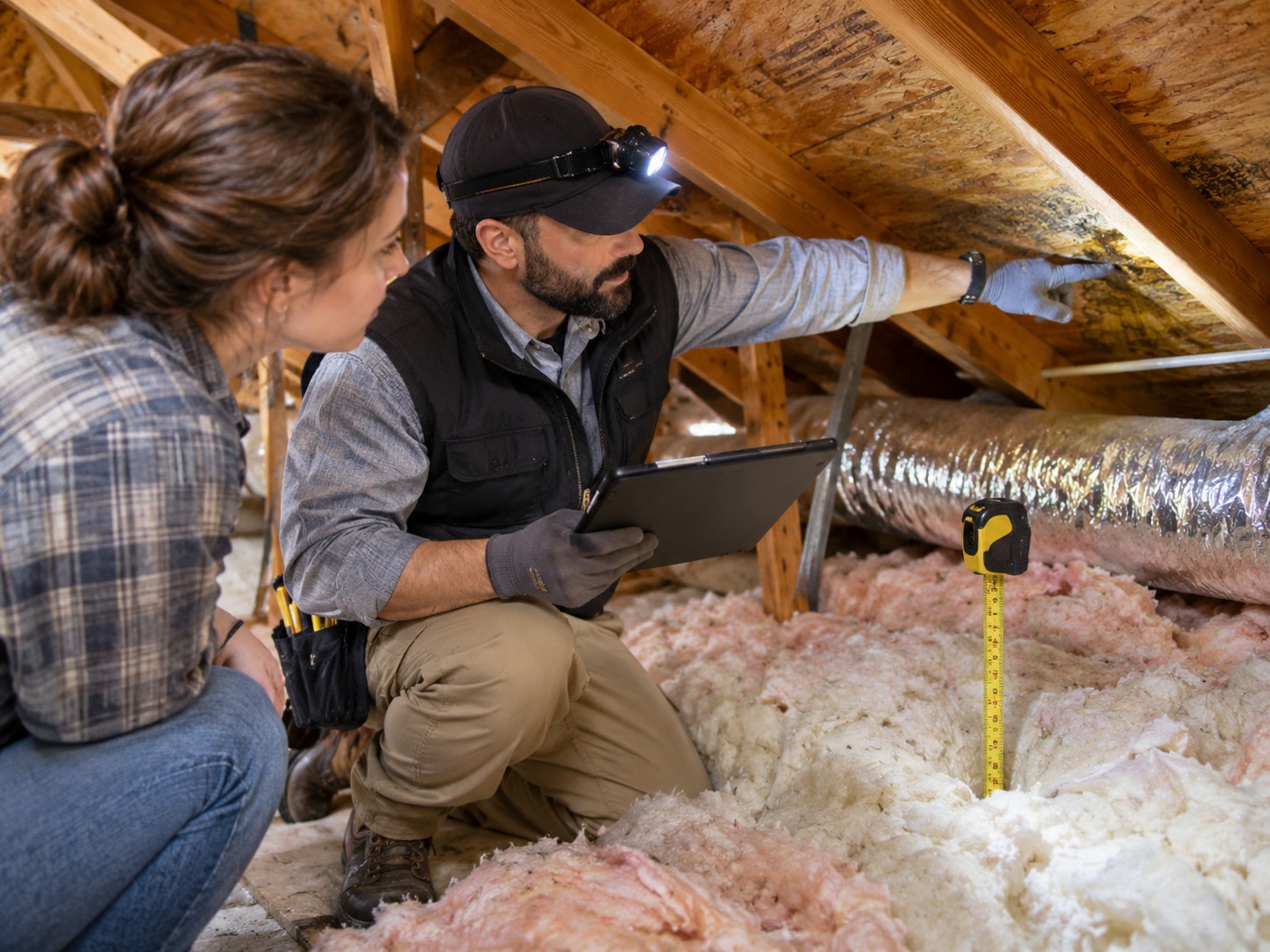
A homeowner who asks for a price over the phone is really asking a contractor to guess at four things they cannot see: the attic's true size, the type and condition of the insulation, the level of contamination, and how hard the space is to work in. A number given without that information is either padded to cover the unknowns or lowballed to win the call, and both tend to change once a crew actually looks. This is why careful attic insulation removal companies insist on an inspection before committing to a figure. The inspection is not a sales tactic. It is the only way to quote the real job.
The inspection also protects the homeowner from a different problem, which is a price that balloons mid-project. When a contractor has seen the attic and written down what is there, the scope is fixed and the surprises are few. When a contractor quotes blind and then discovers rodent contamination or hazardous material on day one, the homeowner is suddenly negotiating from a weak position with a crew already on site. A thorough look up front keeps the cost honest from start to finish.
Partial Removal Versus a Full Tear-Out
Not every project means stripping the attic to bare joists. Where only part of the insulation is wet, contaminated, or compressed, a contractor may remove the affected sections and preserve the rest, which lowers cost. The judgment call is whether the remaining material is genuinely clean and still performing, because partial removal that leaves a hidden problem behind is a false economy. A good contractor explains where the line falls and why, rather than defaulting to a full tear-out on every home or cutting corners to shave the quote.
Full removal becomes the clear choice when contamination is widespread, when the insulation is uniformly old and failed, or when the attic is being brought up to a current R-value that the old uneven layer cannot support. In those cases the cost of removing everything is justified by the result, because the new blanket can be installed to full depth over a clean, sealed floor. Understanding which scenario applies to a specific attic is the difference between paying for necessary work and paying for more than the home needs.
Red Flags in a Low Quote
A quote that sits far below the others is worth a second look, because the gap usually hides something. Common red flags include disposal left vague or excluded, no mention of testing in a pre-1980 home, a refusal to put the scope in writing, and a price offered without any inspection. Each of these can turn into a cost later, or into material handled improperly in a way that creates a bigger problem. The cheapest number on paper is not the cheapest job once the missing pieces reappear.
Price pressure also shows up as a push to skip steps that matter. A contractor who proposes to blow new insulation over a contaminated attic to save the removal cost is offering a discount on a result that will not last. The honest comparison is not which company names the lowest figure, but which one quotes the complete, correct scope for the attic in question. On that basis, the mid-range written quote from a licensed contractor usually beats the suspiciously cheap verbal one.
Questions That Make Quotes Comparable
A few direct questions put every bid on the same footing. Homeowners can ask how the attic area was measured, whether the price covers removal only or removal plus air sealing and new insulation, how disposal is handled, whether the home's age calls for asbestos or vermiculite testing, and what warranty covers the work. The answers reveal both the scope and the contractor's candor. Two companies that both answer clearly can be compared on substance, while a company that dodges the questions has told a homeowner something useful about how the rest of the job would go.
It also helps to separate the cost of the problem from the cost of the upgrade. Removing contaminated insulation is money spent to solve a hazard, while installing a higher R-value is money spent to lower later bills and improve comfort. Keeping the two straight lets a homeowner decide how far to take the upgrade once the necessary removal is done, rather than treating a single lump sum as all or nothing. A contractor who itemizes the quote makes that decision possible.
Timing can affect the experience if not the base price. Removal crews work year round in Los Angeles, but booking ahead of a planned insulation upgrade keeps the attic from sitting exposed between steps. Homeowners who line up removal and replacement with the same contractor, on dates close together, tend to get a smoother project and a shorter window where dust and pests can reach an open attic. Gathering two or three written quotes on the same defined scope remains the surest way to judge whether a given attic insulation removal price is fair.
Pure Eco Inc. provides attic insulation removal services across the San Fernando Valley and Greater Los Angeles from 9740 Variel Ave in Chatsworth, under California contractor license number 993589, with free home assessments and written estimates. Homeowners comparing attic insulation removal companies and the cost of a project can reach the team at (877) 870-7998 or learn more from Pure Eco Inc..
About Chatsworth, CA
Neighborhood of Los Angeles in California, United States
Chatsworth is a suburban neighborhood in Los Angeles, California, in the San Fernando Valley. The area around the town was home to Native Americans, who left caves containing rock art. Chatsworth was discovered and settled by the Spanish beginning in the 18th century. The land was part of a Spanish land grant, Rancho Ex-Mission San Fernando. After the United States purchased the land following the Mexican–American War, it was the largest such grant in California. Chatsworth has seven public and eight private schools. There are large open-space and smaller recreational parks as well as a public library and a transportation center. Landmarks in the town include the former Chatsworth Reservoir and the Santa Susana Field Laboratory. The neighborhood has one of the lowest population densities in Los Angeles and a relatively high income level. Chatsworth is the home of the Iverson Movie Ranch, a 500-acre (202-hectare) area which was the most filmed movie ranch in history, as more than 2,000 productions used it as a filming location.
This section needs to be updated. Please help update this article to reflect recent events or newly available information.(January 2025)
The 2000 U.S. census counted 35,073 residents in the 15.2 square miles (39 km2) Chatsworth neighborhood, or 2,301 people per square mile, among the lowest population densities for both the city and the county. In 2008, the city estimated that the population had increased to 37,102. In 2000, the median age for residents was 40, considered old for city and county neighborhoods; the percentages of residents aged 35 and older were among the county's highest.[2]
The neighborhood was considered to be ethnically "moderately diverse" for both the city of Los Angeles and its county, with a relatively high percentage of whites and Asian people, and a sizable Hispanic/Latino community. The population was 65.7% Non-Hispanic White, 14.4% Asian, 13.5% Hispanic or Latin, 2.2% Black, and 4.2% of other origins. Among the 25.2% of residents born abroad - a low figure for Los Angeles - Korea (10.4%) and the Philippines (9.3%) were the most common places of birth.[2]
The median yearly household income in 2008 dollars was $84,456, considered to be a high income for the city. The percentages of families that earned more than $40,000 was considered high for the county. Renters occupied 28.9% of the housing stock, and house- or apartment-owners held 71.1%. The average household size of 2.6 people was considered average for Los Angeles.[2]
In 2000, there were 2,933 military veterans, or 10.8% of the population, a high percentage compared to the rest of the city. The percentage of married people was among the county's highest. The rate of 10% of families headed by single parents was low for the city.[2]
Chatsworth is flanked by the Santa Susana Mountains on the north, Porter Ranch and Northridge on the east, Winnetka, Canoga Park, West Hills on the south, the Simi Hills, and unincorporated Los Angeles County and Ventura County on the west, and Twin Lakes, a community founded by San Francisco's George Haight in the early 20th century and unincorporated Los Angeles County which includes a 1,600-acre park with equestrian trails, to the north.[3][4]
Chatsworth was inhabited by the Tongva, Chumash, and Tataviam. They inhabited the valley for an estimated 8,000 years. Stoney Point is the site of the Tongva village of Momonga, which was also a trading place with the neighboring Tataviam and Chumash people.[6] The nearby Burro Flats Painted Cave remains a legacy of the Chumash culture's rock art and solstice ceremony spirituality.[7]
The first European explorers came into the Chatsworth area on August 5, 1769, led by the Spanish military leader Gaspar de Portolà. With its establishment in 1797 and subsequent Spanish Land Grant by the King of Spain, Mission San Fernando (Mission San Fernando Rey de España) gained dominion over the San Fernando Valley's lands, including future Chatsworth.
The Native American trail that had existed from the Tongva-Tatavium village called rancheria Santa Susana (Chatsworth) to another village, replaced by Mission San Fernando, became the route for missionaries and other Spanish travel up and down California. It was part of the El Camino del Santa Susana y Simi trail that connected the Valley's Mission, Los Angeles pueblo (town), and the southern missions with the Mission San Buenaventura, the Presidio of Monterey, and the northward missions. The trail crossed over the Santa Susana Pass to the Simi Valley, through present day city park Chatsworth Park South and the Santa Susana Pass State Historic Park. In 1795, the Spanish land grant had been issued for Rancho Simi, reconfirmed in 1842 by the Mexican governor.[8][9][10] Its lands included part of current Chatsworth, westward from Andora Avenue.
The Chatsworth Historical Society was formed in 1963 in an effort to successfully save the historic Pioneer Church from demolition. The society and Chatsworth Museum are located in Chatsworth Park South at Los Angeles Cultural Historical Monument No. 133, the Homestead Acre . In addition to preserving Chatsworth history and educating the public, the society acts as conservator of the Homestead Acre.[12]
The center of Chatsworth, 1911, on what is now Topanga Canyon Boulevard
In 1869, the grantee's son, Eulogio F. de Celis, returned from Spain to Los Angeles.[13] In 1874, the family sold their northern half of Rancho Ex-Mission San Fernando to northern Californians, California State SenatorCharles Maclay and his partners George K. Porter, a San Francisco shoe manufacturer, and his cousin Benjamin F. Porter. The Porters' land was west of present-day Sepulveda Boulevard including most of Chatsworth, and the Maclay land was east of Sepulveda Boulevard.[14]
The Old Santa Susana Stage Road or Santa Susana Wagon Road continued in use as an alternative to the route along El Camino Viejo from 1861 to 1875, replacing the older road as the main route between Los Angeles and San Francisco. The downgrade from the Santa Susana Pass into Chatsworth was known as "The Devil's Slide". A new wagon route bypassing the deteriorating Devil's Slide was opened in 1895. Initially called El Camino Nuevo (the New Road), it was later named the Chatsworth Grade Road, which continued in use until Santa Susana Pass Road (now Old Santa Susana Pass Road) was built in 1917. In 1876, the Southern Pacific Railroad opened a tunnel through the Newhall Pass, enabling rail connections from Los Angeles north to San Francisco, and rail travel soon replaced travel by stagecoach between Los Angeles and San Francisco. From this time, the stagecoach traffic to Santa Barbara once again used the coast route, and the Santa Susana Pass road was relegated to local traffic.[15] Construction of the 118 Ronald Reagan Freeway through the Santa Susana Pass began in 1968 with major traffic now bypassing Santa Susana Pass Road.[16]
The Chatsworth name, which hails from the stately Chatsworth House in Derbyshire, England, was first recorded in 1888, when George R. Crow filed with the Los Angeles County Recorder's Office a map of the San Fernando Valley with a subdivision he called "Chatsworth Park". William Booth Barber, the president of the San Fernando Valley Improvement Company, was born in England 17 miles from the Duke of Devonshire's palatial estate, Chatsworth House. In 1893 W.B. Barber filed an additional map with the Recorder's Office called the "Plat of Chatsworth Park Townsite".[17]
The Chatsworth Transportation Center also offers connections to several Los Angeles Metro, Simi Valley, and Santa Clarita bus routes. It is located at 10046 Old Depot Plaza Road, between Devonshire and Lassen streets.[28]
Chatsworth is serviced by the 118 freeway in the northern end of the neighborhood.
Chatsworth Park North: includes more than 20 acres (81,000 m2) of the scenic Simi Hills and is operated by the Los Angeles Parks Department,[31][32] has three baseball diamonds, football field, and outdoor basketball courts, all lighted; volleyball courts, a children's play area, hiking trails, a jogging path, and picnic tables with barbecue pits.[33] The park now has fencing that blocks visitors from climbing the large boulder outcrops, but Stoney Point Park and Chatsworth Park South are nearby for bouldering and rockclimbing
Chatsworth Park South: includes more than 100 acres (0.40 km2) of the rocky landmark Simi Hills.[34] Chatsworth Park South is adjacent to the Santa Susana Pass State Historic Park, a 174-acre (0.70 km2) National Register of Historic Places property consisting of historic features and deposits, prehistoric village site remnants, and portions of the Old Santa Susana Stage Road, which was the main route for mail and travelers between Los Angeles and San Francisco from 1861 until the opening of rail connections between the two cities in 1876. The stage route was also declared Los Angeles Historic-Cultural Monument #92 (designated January 5, 1972) and Ventura County Historical Landmark #104 (designated October 21, 1986).[35] The park has miles of horseback, jogging, and hiking trails, picnic tables and barbecue pits, and bouldering outcrops[36]
Chatsworth Recreation Center facilities are located within the lower area of Chatsworth Park South, with lighted indoor basketball courts, lighted outdoor basketball courts, a children's play area, an indoor gymnasium, a stage, and lighted tennis courts[37]
The Minnie Hill Palmer House, one of the West Valley's historic original homestead houses, is in Chatsworth Park South for visits and the Chatsworth Historical Society archives
The park had been closed from February 2008 to 2018 due to contamination discovered from when the park used to be a shooting range for Roy Rogers[38]
Michael D. Antonovich Park at the Joughin Ranch: includes over 1600 acres of hiking, equestrian trails, creeks, waterfalls and the site of one of the historic Bannon Quarries[39]
Santa Susana Pass State Historic Park (SSPSHP): a large natural area adjacent to and above the town's western side.[40] The Santa Susana Pass State Historic Park protects and offers a historical site of the late 19th century, when Chatsworth was on a main thoroughfare for the figures of the American West. Joaquin Murrieta and his bandits hid out in the rocky crevices around Stoney Point. The Old Stagecoach Trail above Chatsworth to the west, is now a popular hiking trail in the Simi Hills. It goes through Santa Susana Pass State Historic Park and Chatsworth Park South and by Chatsworth Oaks Park. The State Park is open to the public with several parking and trailhead areas and many hiking and view opportunities[41]
Chatsworth Oaks Park: an approximately 3-acre (1.2 ha) natural open space park. It has barbecue pits, a children's play area, and picnic tables near the parking area. Visitors may ride bicycles and hike in the park, which has no established trails but links to nearby Santa Susana Pass State Historic Park. The park overlooks the Chatsworth Nature Preserve, with birdwatching opportunities[42]
Stoney Point Park: at Stoney Point is a natural rock outcropping, geographic promontory landmark and legendary bouldering and rock climbing location on 76-acre (31 ha). The boulders at Stoney Point Park merge and form alcoves, caves, and dens. The park also has bridle paths, hiking trails, and connections to adjacent parks to the north.[43] Stoney Point is thought to be the site of the Tongva settlement named Asha'awanga or Momonga. Browns Creek Bike Path ends near Stoney Point
Chatsworth Trails Park: in the Santa Susana Mountains foothills just north of the 118 Freeway with parking at 11200 Mayan Drive. Chatsworth Trails Park has miles of horseback, hiking, and mountain biking trails and is also a hub connecting to the huge Michael D. Antonovich Regional Park at Joughin Ranch, the Indian Springs Open Space Park, and Rocky Peak Park at Rocky Peak.[44] The Rim of the Valley Trail passes through here, with trailhead access[45]
Sage Ranch Park: overlooks Chatsworth from its 2,000-foot (610 m) high ridges in the Simi Hills near the Santa Susana Field Laboratory. It is a new open space park at the end of Woolsey Canyon Road. Sage Ranch Park has campsites, walking and hiking trails, and panoramic views of the San Fernando and Simi Valleys.[46] It is located in Simi Valley
Mason Park:[47] offers barbecue pits, lighted and unlighted baseball diamond, children's play area, and picnic tables[47]
Mason Recreation Center:[48] has an indoor gymnasium that may also be used as a 400-capacity auditorium
Mason Child Care Center:[49] is licensed to have from up to 30 children of ages three and up to 60 school age children in educational and recreational activities at the center
A distinctive feature in Chatsworth is the Chatsworth Dam and reservoir. Built in 1918 as part of the Los Angeles Aqueduct system, the property belongs to the Los Angeles Department of Water and Power. Due to increasing concerns of the water quality because of algae plumes and storm water inflow, it was taken out of service in August 1969. After the 1971 San Fernando earthquake additional concerns for seismic safety led to its abandonment by the LADWP as a storage facility.[50] Chatsworth Oaks Park and the Chatsworth Nature Preserve are located here giving views of migrating birds and other animals, and their sounds such as the coyotes calling in the evening. The views of the rocky and dramatic Simi Hills surround the open space.[51]
Chatsworth Reservoir is classified by the Los Angeles Times as a city neighborhood, but "because there are relatively few homes in this area," the Times does not provide separate statistics for it, but adds them to Chatsworth.[52] The Devonshire and Topanga stations of the Los Angeles Police Department provide services in the area.[53]
Chatsworth is the home of the National Notary Association and the headquarters for Premier America (formerly Litton Federal Credit Union) and Matadors Community Credit Union.
The Santa Susana Field Laboratory (SSFL), once busy with Rocketdyne testing rocket engines and Atomics International doing nuclear research, is high in the Simi Hills west of Chatsworth.[54] It has been closed and will undergo an extensive environmental cleanup, andsoon become an open-space park.[55] The park will permanently add to Chatsworth's scenic backdrop, greenway, and hiking opportunities.[56]
Titus Software's United States subsidiary once had its headquarters in Chatsworth.[57]
Seltzer Motor Industries, of Chatsworth, in 1979 produced the Willow, a two-seat sports car kit. It is the first transverse, inline four-cylinder, mid-engined kit car ever offered to the public.[58]
^Lubas, Kenneth (January 31, 1971). "Indians Trying To Safeguard Cave Paintings of Ancestors: Mission Tribe Will Ask Rocketdyne To Enclose Historic Works in Glass for Protection Against Any Vandalism". Los Angeles Times.
^Ensign, C. A. (1903). "Notes of Litigation on the Title of a Mexican Land Grant". The Michigan Engineer. 22–25. Michigan Engineering Society: 1124–1147.
^"CHS Museum". www.chatsworthhistory.com. Retrieved May 12, 2024.
^Romantic Day, Pathetic End: Sad Burial of Once Wealthy Scion of Spain, Los Angeles Times, May 26, 1903, Eulogio F. de Celis
^Roderick, K. (2001). The San Fernando Valley: America's Suburb. Los Angeles, California: Los Angeles Times Books. ISBN978-1-883792-55-8.
Should removal and new insulation be quoted together?
Usually yes. Bundling attic insulation removal and replacement tends to cost less than two separate visits, because the crew is already set up and the air sealing between steps is easier with the cavity empty. When comparing estimates, check whether a price covers removal alone or the full remove, seal, and replace sequence, since that explains many differences.
Are there rebates for attic insulation in Los Angeles?
Local utilities such as LADWP and SoCalGas have offered rebates for qualifying attic insulation upgrades, though amounts and eligibility change each year and should be confirmed directly. The federal residential energy tax credits under Sections 25C and 25D ended for property placed in service after December 31, 2025, so a 2026 project should not be budgeted around them.